Is Paraguay safe? For most expats and travelers, yes: the U.S. State Department keeps Paraguay at its lowest advisory level, and Paraguay's homicide rate is among the lowest in South America. That said, street crime in Asunción is real, a few northern and border departments call for extra care, and heat, dengue and traffic are bigger day-to-day risks than violent crime. Here is what we tell friends and clients who are thinking about moving here.
Is Paraguay safe? What official travel advisories say in 2026
Government travel advisories are a good starting point because they are updated regularly and are not trying to sell you anything. As of November 2026, this is where they stand:
- United States: The State Department advisory issued on 19 August 2026 rates Paraguay Level 1, "Exercise normal precautions", the lowest of its four levels. It asks visitors to exercise increased caution (Level 2) in five departments because of crime: Alto Paraná, Amambay, Canindeyú, Concepción and San Pedro. U.S. government staff need special permission to travel there, may not drive at night between those departments, and are not allowed to use municipal buses in Paraguay because of the risk of robbery and assault.
- Canada: Canada's travel advice is more cautious and asks Canadians to "exercise a high degree of caution" due to crime. It notes that pickpocketing and bag snatching happen frequently and that criminals sometimes watch people withdrawing cash at ATMs.
- United Kingdom: The FCDO mentions a small number of high-profile kidnappings in recent years but says foreigners are not routinely targeted. It warns that counterfeit banknotes are common and recommends changing money only at banks or registered exchange offices, never with street changers.
- Australia: Smartraveller also advises a high degree of caution in Paraguay, citing the threat of violent crime.
On the Global Peace Index 2025, which combines crime, conflict and militarisation indicators, Paraguay ranked 75th of 163 countries, with a slightly better score than the year before.
How Paraguay compares with its neighbours
Homicide rates are one of the few crime figures that can be compared reasonably well across countries. The research group InSight Crime collects official data every year. Its figures for 2025 (published in early 2026) put Paraguay at around 6 homicides per 100,000 people, with 391 homicides in 2025 compared with 477 in 2024.
| Country | Homicides per 100,000 people (2025, approx.) |
|---|---|
| Argentina | about 3.7 |
| Chile | about 5.4 to 5.8 (sources differ) |
| Paraguay | about 6.1 to 6.2 |
| Uruguay | about 10.3 |
| Brazil | about 19.2 |
Two caveats: homicide rates say little about petty theft, which is what most newcomers actually encounter, and national averages hide big local differences. In Paraguay, violent crime is concentrated in the border regions rather than in the neighborhoods where expats usually live.
Where to be careful: street crime in Asunción and the border areas
Phone snatching and motochorros
The crime you are most likely to hear about in Asunción is the motochorro: two people on a motorcycle who snatch a phone or bag from a pedestrian, a delivery rider or a driver with the window down at a traffic light. Paraguayan newspapers report these robberies regularly in Asunción and the surrounding metro area, most often at night, and not only in poorer districts. In its May 2025 security report, the U.S. government's Overseas Security Advisory Council rated Asunción a high-threat location for crime.
Simple habits make a big difference:
- Do not walk while texting near the curb, and keep your phone away from open car windows.
- Keep windows up and doors locked at traffic lights, especially after dark.
- Use ATMs inside shopping centres, banks or supermarkets, and be aware of who is around you.
- The historic downtown is lively during office hours but empties quickly in the evening. At night, take a car rather than walking long stretches there.
- If someone threatens you, hand over the phone. Nothing in it is worth an injury.
The northern and eastern border departments
The five departments on the U.S. Level 2 list sit along the Brazilian border or in the north. Canada and the UK describe drug and arms smuggling around Pedro Juan Caballero (Amambay), in Canindeyú and in the tri-border area near Ciudad del Este, as well as a small armed group, the EPP, active in parts of San Pedro and Concepción. These problems mainly affect local residents and seldom touch visitors, but they explain the warnings. If you need to go there, travel by day, stay on main roads and never try to cross a roadblock.
Safest neighborhoods for expats in Asunción
There is no reliable public crime data for each barrio, so we will not pretend there is. What we can tell you is where many foreigners choose to live and why:
- Villa Morra: central, with shopping centres, restaurants and offices within walking distance.
- Carmelitas: small and walkable, full of cafés and bars, with many apartment towers that have 24-hour reception.
- Recoleta: residential and close to Villa Morra, popular with families.
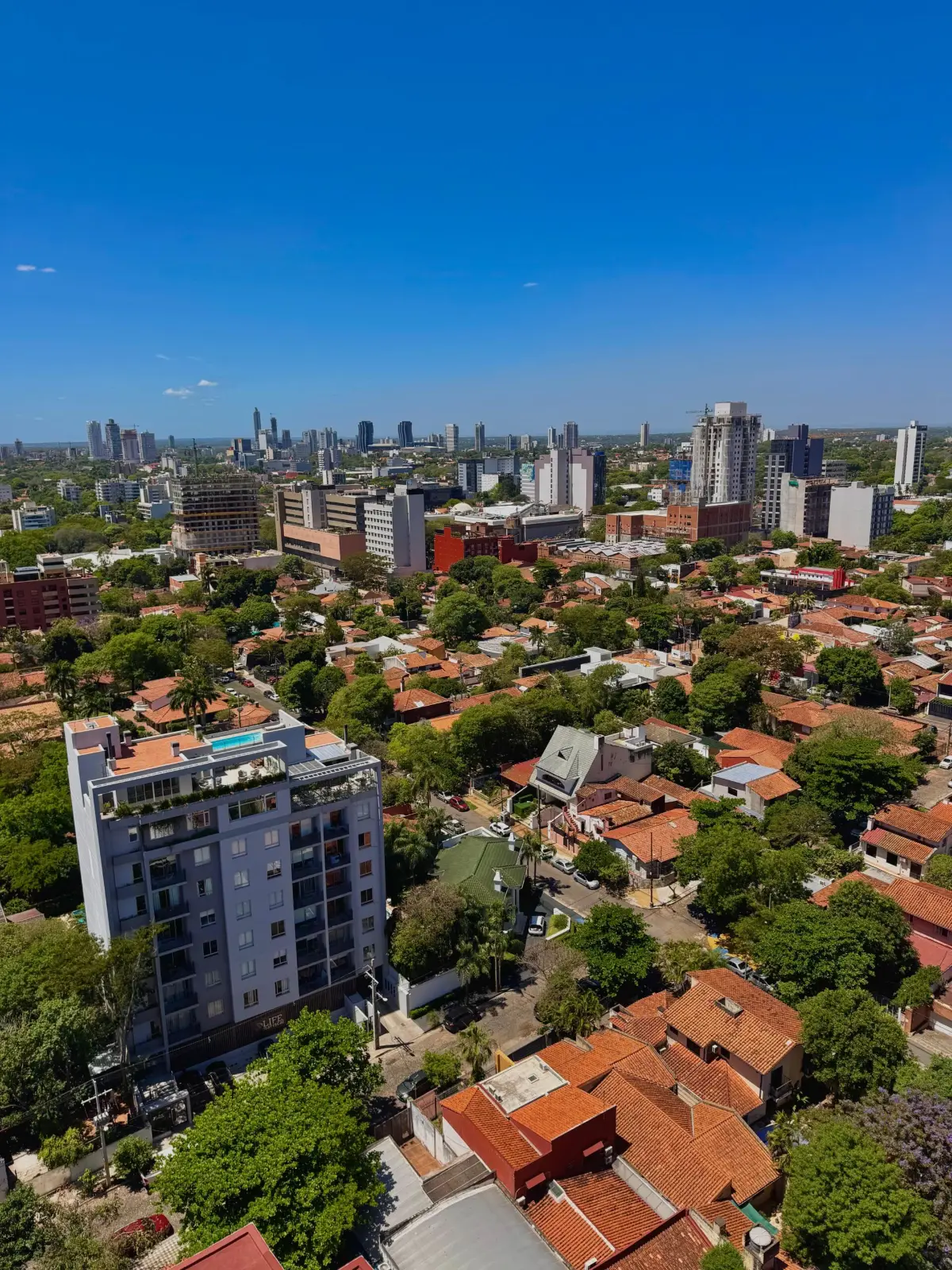
- Mburucuyá: quieter, greener streets with houses and a more suburban feel.
Most expats here live in buildings with a doorman or in houses with alarms and secure gates. Keep in mind that motochorros also operate in wealthier areas, so the habits above apply everywhere. For rents and day-to-day prices in these areas, see our cost of living in Paraguay guide, and for a broader look at daily life, read living in Paraguay as an expat.
Getting around Asunción safely
Uber and other ride-hailing apps work well across greater Asunción and are inexpensive. They are what most expats use, because the driver and route are recorded and you avoid haggling. If you take a taxi, Canada's advice is to hail one in the street only during the day and to book by phone after dark; it also notes that taxis often lack working seat belts. City buses are cheap, but as mentioned above, U.S. government staff are not allowed to use them because of robberies.
If you plan to drive, Canada and the UK both advise against driving at night outside the cities. Rural roads are often unpaved and badly lit, and some vehicles drive without lights. In the city, expect motorcycles weaving through traffic and drivers who treat traffic lights loosely.
Is Paraguay safe for families and children?
Families who move here often comment on how child-friendly daily life is: children are welcome in restaurants, extended families meet every weekend, and shopping centres and parks are busy with kids. Most international families live in the neighborhoods listed above and choose a private or international school with its own controlled entry and pickup system. Our guide to international schools in Asunción covers the options.
The real risks for children are mostly the ones in the next section: the summer heat, mosquitoes and traffic. Use child car seats, apply repellent in the warm months and keep your kids well hydrated.
Health, heat and road safety
- Heat: Summers are long and hot. In January 2026, Paraguay's meteorological office forecast highs of around 40 °C (104 °F) for weeks on end. Plan outdoor activity for early morning or evening, drink plenty of water and make sure your home has working air conditioning.
- Dengue: Dengue is carried by mosquitoes and comes back every year. In 2026 the Ministry of Public Health reported a few hundred confirmed cases by mid-year (June to August 2026) and described the situation as stable, but cases usually rise in the hot, rainy season. Use repellent, empty standing water around your home and see a doctor if you develop a high fever.
- Roads: Traffic is probably the most underrated risk. Wear a seat belt, never ride a motorcycle without a helmet, and be extra careful at unregulated intersections.
Scams and paperwork pitfalls to avoid
Paraguay is not a scam-heavy country, but a few things catch newcomers out:
- Unlicensed "facilitators": Some people offer to speed up your residency or other paperwork for a cash fee, with no contract, no receipts and no clear list of what is included. Ask for a written scope, official receipts for government fees and references before you pay anyone.
- Counterfeit notes: As the UK advice says, change money at banks or registered exchange offices and check large guaraní notes.
- Property and rental deposits: Do not send a deposit for an apartment you have not seen, or before checking who actually owns it.
Our residency packages and pricing page lists what our fees include, so you can compare offers like for like.
How WeParaguay helps newcomers settle in safely
Most of what makes a move feel safe is knowing how things work locally. Our Local Concierge service (from $500 to $3,500, depending on what you need) covers airport pickup, setting up a local SIM card and a city orientation, so you learn which areas to live in, how to get around and which habits locals rely on. For residency clients, we go with you to the government offices, so you are never left alone at a counter trying to work out what is missing.
FAQ: Is Paraguay safe?
Is Paraguay safe for American travelers?
Generally, yes. As of the August 2026 advisory, the U.S. State Department rates Paraguay Level 1, with increased caution in five northern and eastern border departments.
Is Asunción safe at night?
The main residential and nightlife areas are busy and generally fine, but phone snatching happens. Use ride-hailing apps rather than walking long distances, especially downtown.
Is Ciudad del Este safe?
It is in Alto Paraná, one of the five departments where the U.S. asks for increased caution. Many people visit for shopping without problems, but stay alert, go during the day and keep your valuables out of sight.
Is Paraguay safe for solo female travelers?
Many women live and travel here alone. Canada's advice notes that women may face some harassment or verbal abuse, so the usual big-city precautions apply.
What is the emergency number in Paraguay?
Dial 911 for the police; the U.S. and Australian governments both list it. Operators mainly speak Spanish, so save a few key phrases and your embassy's number in your phone when you arrive.
Thinking about moving to Paraguay?
If you would like an honest answer to questions about your own situation, book a free call with Osher. He can talk you through daily life, neighborhoods and the steps toward residency in Paraguay.
Sources
- U.S. Department of State: Paraguay Travel Advisory (19 August 2026)
- Government of Canada: Paraguay travel advice
- UK FCDO: Paraguay safety and security
- UK FCDO: Paraguay regional risks
- Australian Government Smartraveller: Paraguay
- OSAC: Paraguay country security report (May 2025)
- Institute for Economics and Peace: Global Peace Index
- InSight Crime: 2025 Homicide Round-Up
- La Nación: Paraguay among the three countries in the region with the lowest homicide rate in 2025 (June 2026)
- Última Hora: wave of motochorro robberies in Asunción
- La Nación: heat forecast from the meteorological office (January 2026)
- ABC Color: Health Ministry dengue update (June 2026)
- La Nación: dengue under control (September 2026)